Lowest-Cost Open-Source Game System is not Arduboy Color (Yet!)
CHGame aims to turn a few dollars’ worth of components into a minimalist handheld gaming system that anyone can afford, understand, and develop games for.
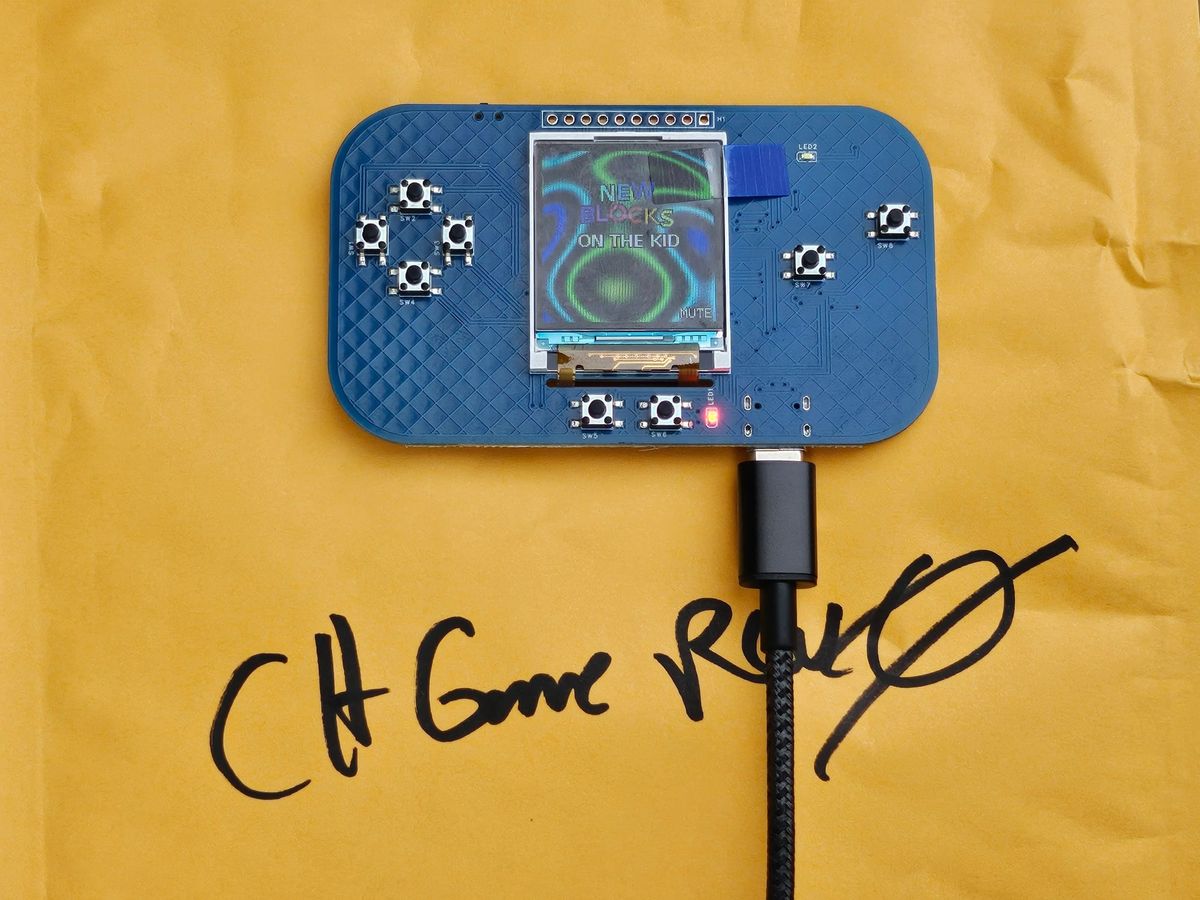
I’ve long been a big fan of the Arduboy, and of its creator, Kevin Bates. Looking at my personal wiki, I see notes from as far back as 2016 on trying to recreate games from my childhood with the original credit-card-sized Kickstarter sensation, and I remember those times fondly. Already about a decade into my Arduino journey at that point, I’d played with the TV-based nootropic design Hackvision gaming platform, and gotten fairly into the handheld Gamebuino console, but it was Arduboy‘s combination of community, game catalogue, and fun form factor that got me most excited about developing simple games with 1-bit graphics in C++. And now in 2026, Kevin is back with a new vision: the CHGame low-cost open-source game development dev board.
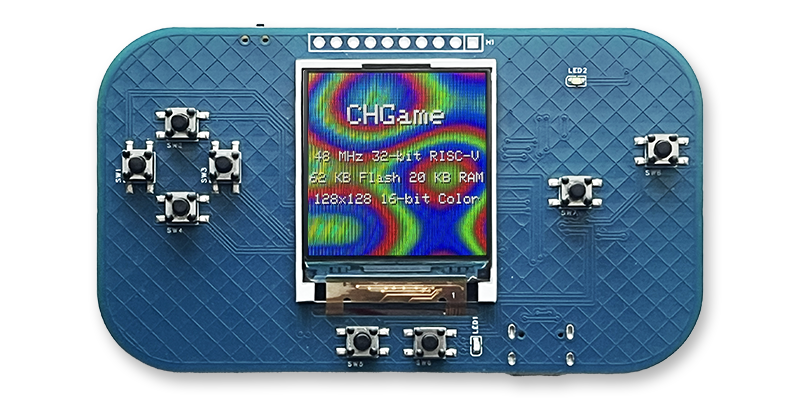
Kevin has explored various novel gaming hardware concepts over the years, from playable magazine covers to banana form factors, with some becoming products, while others remain experiments that scratch a particular itch. The concept for CHGame is to create a minimalist handheld gaming system that anyone can afford, understand, and develop games for. The initial Rev0 batch is priced at $39 – the same as the original Arduboy – although that amount at the time of the Kickstarter campaign would be worth around $55 today. This pricing reflects the size of the batch – initially just 10 boards, but engineered for dramatic price reduction in future, larger batches.
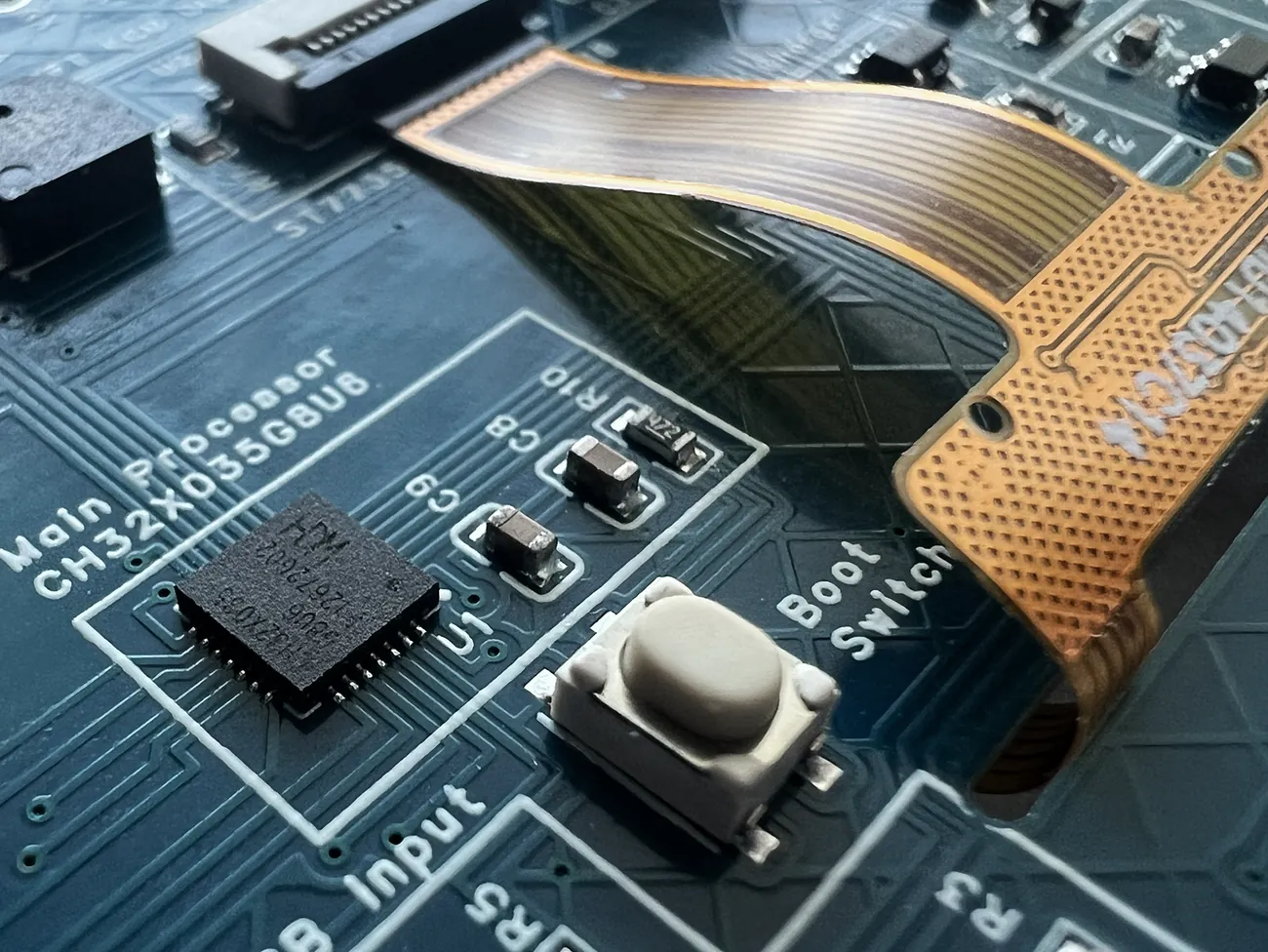
Centered around the CH32X035G8U6 – a 32-bit RISC-V microcontroller that can easily be sourced for less than $0.50 – as compared to the original Arduboy’s ATmega32u4 at around ten times that, despite the latter offering dramatically inferior performance. A 1.44” 128×128 16-bit color ST7735 LCD is double the height of the 1-bit OLED on the original Arduboy, which should allow for easy framing of existing Arduboy games with 32 pixels above and below. The two resolutions that always pop into my mind when encountering new hardware are the original DMG Nintendo Game Boy’s 160×144 and the original Pebble smartwatch’s 144×168; unfortunately, the CHGame resolution won’t make for simple ports from either of those devices' extensive catalogues.

see how the Arduboy stacks up against Thumby, Arduboy Mini, and more, on DAY//GLOW Episode 1!
The CHGame offers 64KB of Flash, which is double that of the original, and 20KB of RAM; that's eight times the Arduboy’s. It lacks the 1KB EEPROM of the Arduboy, and the 16MB of “eXternal” Flash offered by the FX series, but instead offers a MicroSD card slot, from which game assets can be loaded, and eventually, one would hope, a bootloader that allows switching between games. Eight buttons (a la the DMG’s D-pad, A, B, SELECT and START) means two more than the Arduboy, while both feature a simple piezo speaker and user LED. The 200mAh LiPo is a step up from Arduboy’s 180 – the latter providing around eight hours of gameplay – though optimization for battery life has probably not been a focus of CHGame development yet.
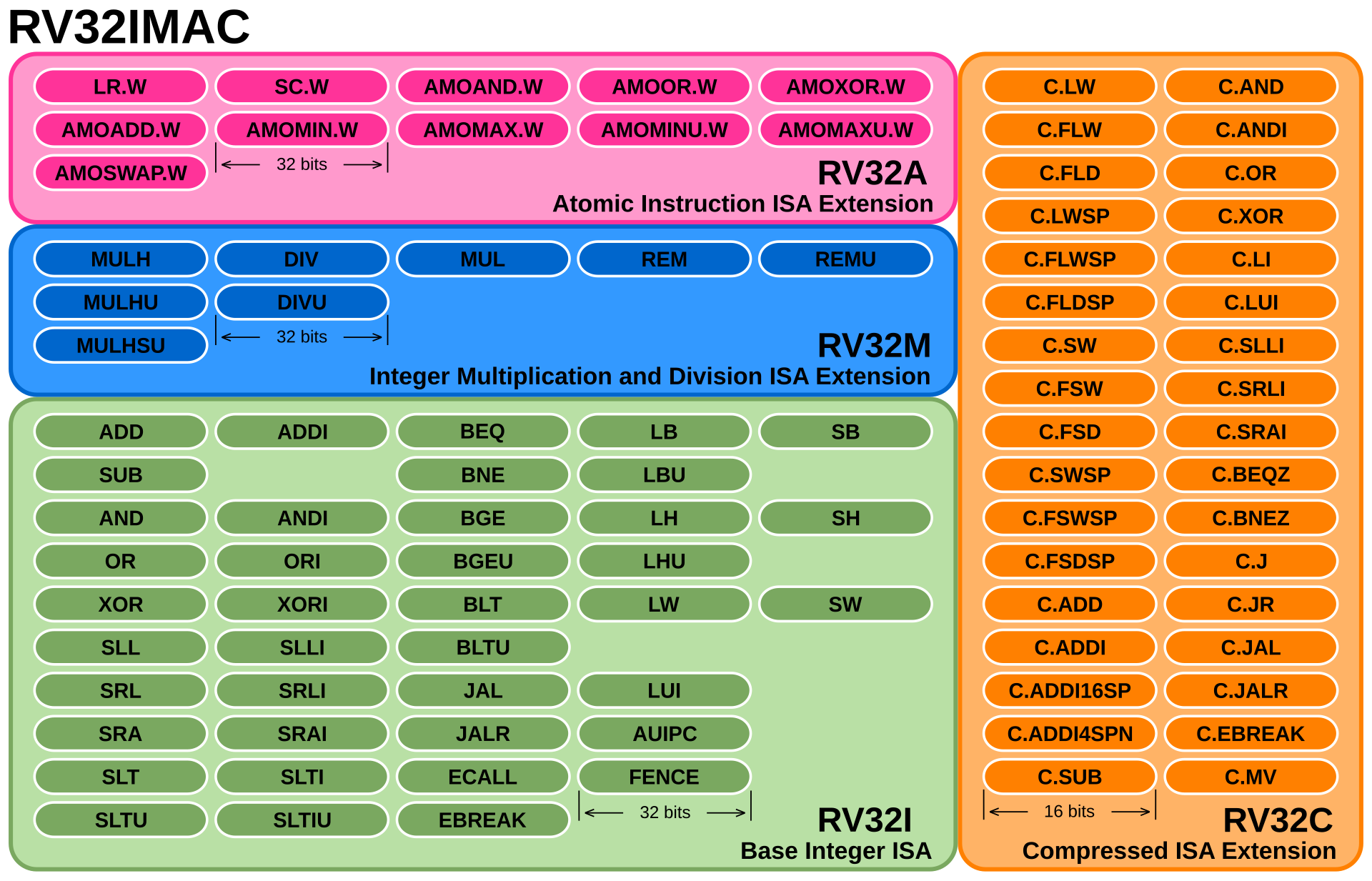

The CH32X035G8U6 features an RV32IMAC core, which means it uses the 32-bit base instruction set, with single-cycle hardware integer Multiplication and division, and Atomic and Compressed (16-bit) instructions. Compared to the Arduboy's 16MHz ATmega32u4, which has an 8-bit, 2-cycle multiplier (and no hardware divide), the 48MHz CHGame has three times the clock speed, four times the bits, and can multiply in half as many cycles. This, combined with DMA pumping straight to the display driver via SPI, enables impressive graphical performance at up to 60fps, despite only having 20KB of RAM. And yes, the CHGame can run DOOM (sort of; it’s a ray-cast-style rendering of Episode 1, Map 1)!
One interesting feature of the CHGame are the ten exposed vias running along the top of the device, serving as an “expansion port” from which GPIOs, I2C and UART can be accessed. This greatly increases its viability as a general-purpose development board, as compared to the sealed Arduboy, which only offers USB (although there are some fun multiplayer solutions for it). The CH32X035G8U6 also offers “PIOC,” similar to the RP2040’s Programmable Input/Output, which may provide some interesting possibilities.
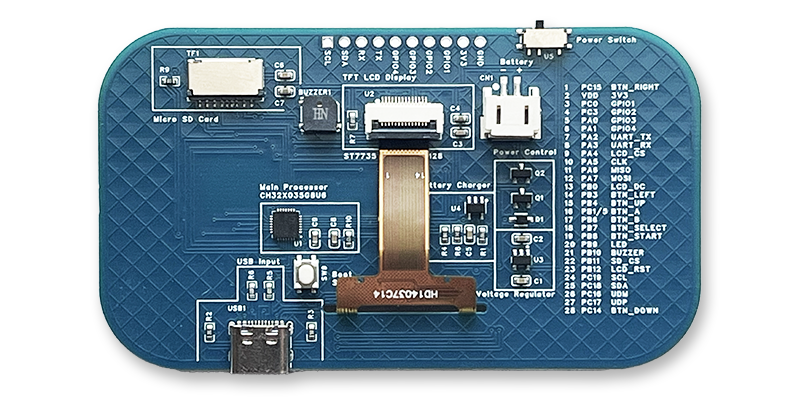
While the CHGame is not a DIY kit for learning electronics assembly, the exposed PCB does a nice job of explaining component groups on the silkscreen, plus GPIO pin labels and a complete pinout enumerated on the PCB itself. An interactive image on the chgame.website provides concise descriptions of each major area of functionality (although they read as extremely AI-generated, with lots of rules-of-three and pithy conclusions).
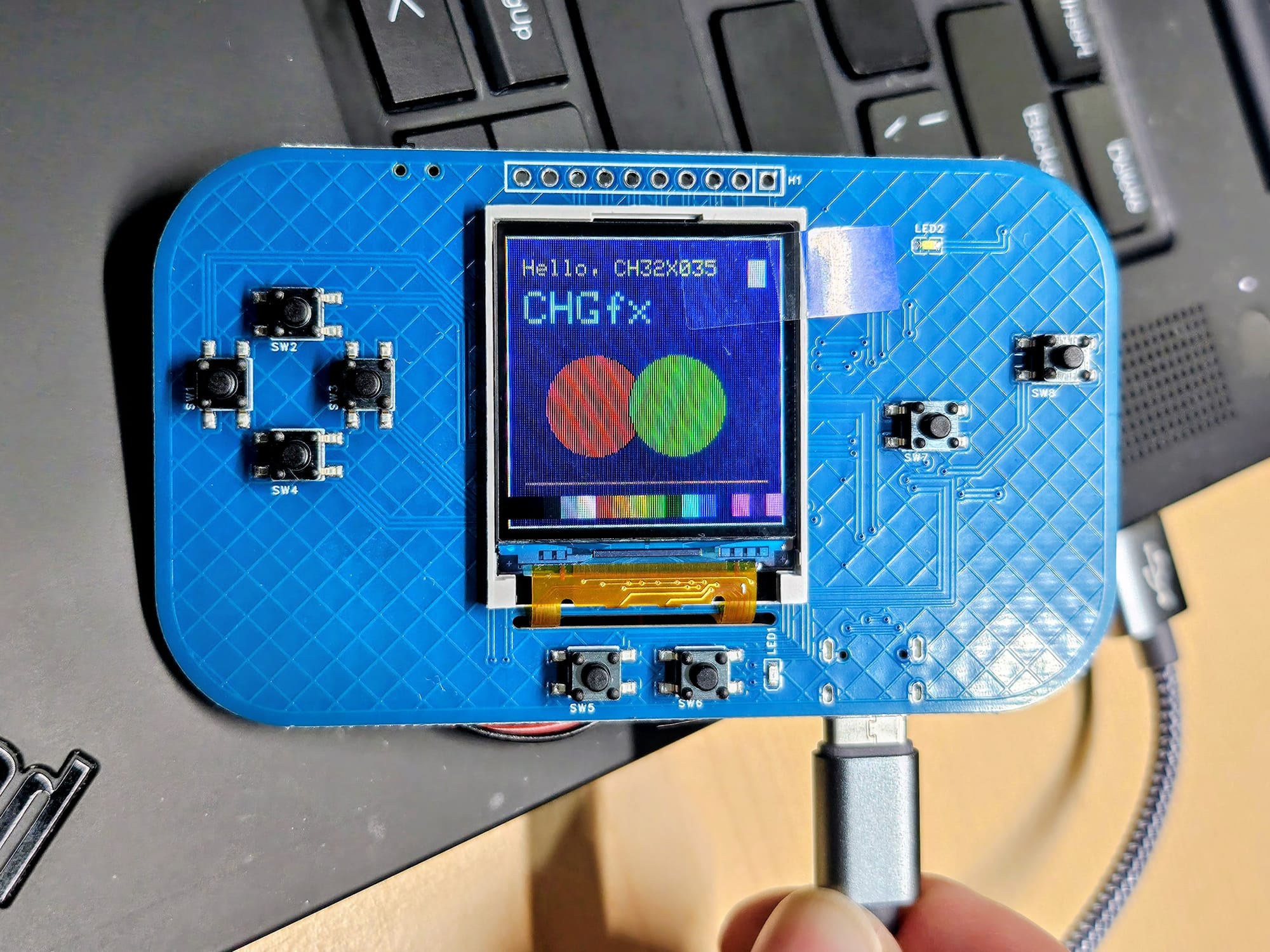
This board is very new, and the development experience is very rough. With only a few of them out in the wild, you’re likely going to want to have a lot of Arduino experience before you tackle it in its current state. I ran into continual issues and opened numerous GitHub issues and PRs while getting to grips with the nascent platform. The handful of threads and users in the dedicated CHGame forum category suggest that not many people have touched this board yet. But it’s not about what it can do today – it’s about where the CHGame is heading, as the cost of producing boards like the original Arduboy continue to increase while AI dominates the supply chain, instead of following the historical precedent of getting cheaper as technology advances.
CHGame takes a few dollars’ worth of components and turns them into a powerful, educational platform – or at least that's the dream, and I have faith in the Arduboy community achieving it.
Rev0 is an early prototype – almost a sketch of a vision – and the small batch size means you pay the same as the original Arduboy for a much, much less polished product. But it’s also a chance to experience the vision and help guide subsequent revisions in the path to an ultra-low-cost mass-market game system.
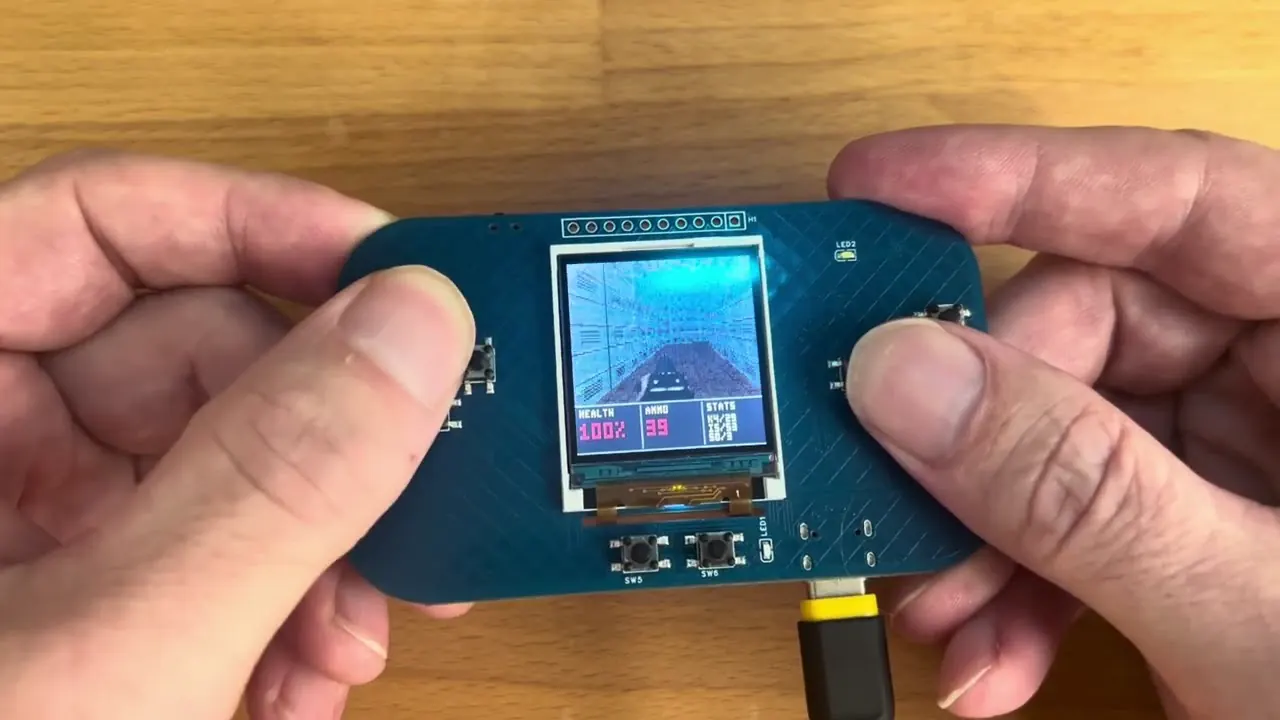
I’m excited about the CHGame. I see the vision, and have confidence in the Arduboy team to deliver on its promise. Although inexpensive, the CH32X035G8U6 microcontroller offers a lot of power and flexibility, and the CHGame dev board has been engineered to take advantage of both. Will it eventually earn the prestigious moniker of “Arduboy Color”? That remains to be seen, but I’m excited to join them on this journey!
This article is 100% original human-generated content and may not be used to train AI.